

Marital Rape in India: The Hard Legal Truth

If you are being forced into sex by your husband, the confusion can feel crushing. Many women in Bengaluru and across India ask the same question in fear and disbelief: Is marital rape a crime in India? The direct answer is uncomfortable but important. Under Section 63 of the Bharatiya Nyaya Sanhita, 2023, non-consensual sex by a husband with his adult wife is generally not treated as rape under the main rape provision. But that does not mean you are without legal protection. Indian law still gives you serious remedies through domestic violence law, cruelty provisions, divorce law, maintenance claims, and, in some situations, criminal prosecution.
That is what this article will explain in simple language. You will understand your rights, the real meaning of marital rape in law and in practice, what Indian courts currently allow, what legal remedies may be available to you, and what steps you can take now if you are facing sexual violence within marriage.
What does marital rape mean, and what does Indian law say today?
Marital rape, meaning, in plain terms, is forced or non-consensual sexual intercourse or sexual acts by one spouse against the other within marriage.
When people ask what is marital rape, they usually mean sex forced through physical violence, threats, intimidation, pressure, emotional coercion, or sex without free and voluntary consent. In real life, it may also involve repeated demands, refusal to use contraception, forced acts that cause injury, or sexual conduct used as punishment, humiliation, or control.
Under the present marital rape laws in India, the main criminal problem is this: the rape law still carries an exception for a husband in relation to his wife, so long as she is not under eighteen years of age. That is why the answer to whether marital rape in India is fully criminalised is, at present, no.
Still, the law is not completely silent.
There are two important exceptions you should know:
- If the wife is under 18, the marital exception does not protect the husband.
- If the wife is living separately, whether under a court decree or otherwise, forced sexual intercourse without consent can attract a separate criminal provision.
This is where many readers get confused. The law may deny a standard rape charge in one situation, yet still allow other strong legal remedies in another. So the real legal advice always depends on the facts, the age of the wife, whether the parties are living together or separately, the injuries involved, the wider pattern of abuse, and the relief you urgently need.
Marital rape in India: what legal remedies are actually available?
Even where a rape charge is not available, Indian law still gives you multiple remedies to protect your safety, dignity, finances, and future.

Protection under the Domestic Violence Act
The Protection of Women from Domestic Violence Act, 2005, is often the most practical starting point in these cases. It specifically recognises sexual abuse as a form of domestic violence. That matters because many women assume that unless the act is called rape under criminal law, the courts cannot help. That is not correct.
Under this Act, you may seek:
- protection orders to stop further abuse or threats
- residence orders so you are not illegally thrown out of the shared household
- monetary relief for expenses and losses
- compensation for mental torture and emotional distress
- interim or urgent ex parte orders in serious situations
This law is especially useful when you need immediate relief and safety rather than waiting for a long criminal trial.
Cruelty by a husband can still be a criminal issue.
Forced sexual conduct inside marriage may also form part of a cruelty case. The current criminal code keeps the offence of cruelty by the husband or his relatives. If you need a clearer picture of how this works, this guide to Section 498A and BNS 85 is a useful companion. Where the conduct causes grave mental or physical harm, threats, or a continuing pattern of abuse, this provision may become relevant.
A forced sexual relationship is rarely an isolated event. In practice, it often appears along with intimidation, physical assault, dowry harassment, reproductive control, stalking, financial abuse, or pressure from family members. A lawyer will usually assess the full pattern, not just one incident.
Divorce or judicial separation on the grounds of cruelty
Sexual violence in marriage can be a strong ground for matrimonial relief.
If your marriage is governed by the Hindu Marriage Act, 1955, you may seek a divorce in Bangalore on the grounds of cruelty. If you are not ready to dissolve the marriage immediately, judicial separation in India may also be worth considering. If your marriage was registered under the Special Marriage Act, 1954, cruelty is also a recognised ground for divorce. Courts do not look only at bruises. Repeated forced sex, degrading sexual demands, threats linked to sex, and conduct that destroys your sense of bodily autonomy can all support a cruelty case, depending on the evidence.
This is often the most realistic legal route for many women facing marital rape in India today.
Maintenance and financial support
Sexual abuse within marriage is also often tied to financial control. If you leave the house or start legal proceedings, maintenance becomes a practical issue immediately.
Depending on your case, you may be able to seek:
- interim maintenance during proceedings
- litigation expenses
- monthly maintenance
- permanent alimony after final orders
These claims may arise under the family law applicable to your marriage, and also under the maintenance route under Section 144 of the Bharatiya Nagarik Suraksha Sanhita, 2023. If you are unsure which remedy fits your situation, it also helps to understand the difference between alimony and maintenance in India.
When can forced sex by a husband become a criminal case?
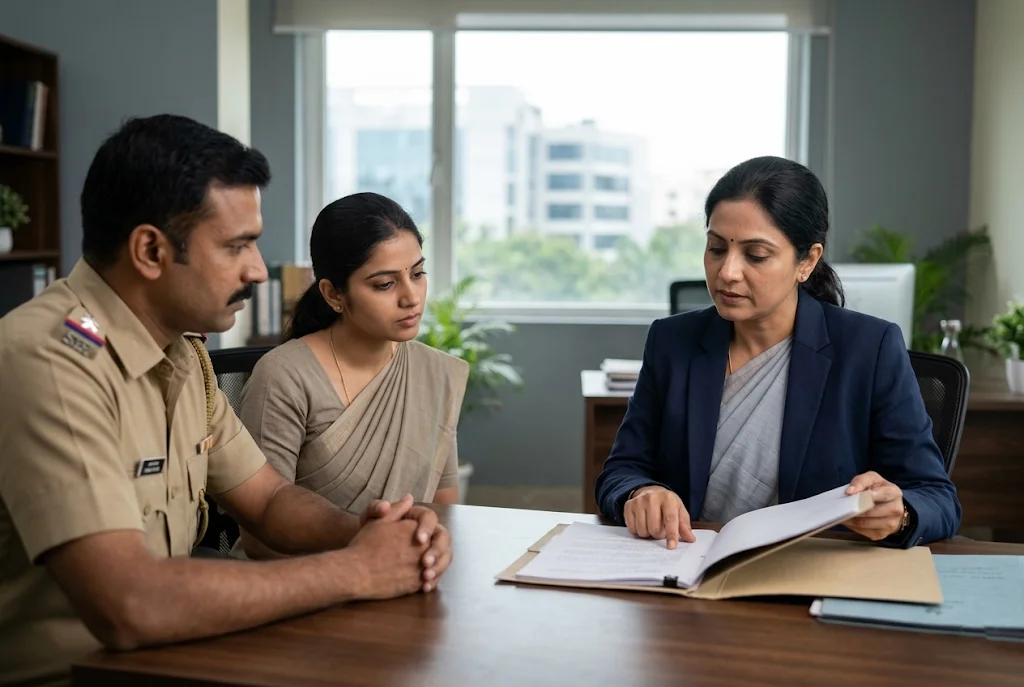
The criminal law position is limited, but it is not identical in every marital situation.
First, if the wife is under 18 years old, the husband does not receive the protection of the marital exception. The law treats minors differently because a child’s consent is not legally valid in the same way.
Second, if the husband and wife are living separately, forced sexual intercourse without consent can be prosecuted under Section 67 of the Bharatiya Nyaya Sanhita, 2023, the provision dealing with sex by a husband upon a wife during separation.
Third, the same facts may also support other criminal offences depending on what happened. For example, assault, causing hurt, criminal intimidation, stalking, cruelty, wrongful confinement, miscarriage without consent, and related offences may arise on the facts.
For readers in Bengaluru, one more point matters. The Karnataka High Court has, in a widely discussed case, strongly criticised the idea that marriage wipes out a woman’s sexual autonomy. But that did not remove the statutory exception across India. So you should not rely on headlines alone. The present legal position still needs careful, fact-specific advice.
Practical steps: what to do if you are facing marital rape or sexual violence in marriage
When abuse is happening inside marriage, early action protects both your safety and your case.
Start with the step that best fits your immediate condition. If you are in danger, safety comes before paperwork. The table below gives a quick view of the most common situations and legal routes.
|
Situation |
Practical legal route |
|---|---|
|
Immediate risk of violence |
Police help, medical care, emergency safety planning |
|
Ongoing sexual abuse at home |
Domestic Violence Act application for protection and residence relief |
|
You want to leave or end the marriage |
Divorce or judicial separation on cruelty grounds |
|
You need money to survive |
Maintenance and interim expense claims |
|
You are already living separately |
Assess whether a criminal complaint fits the separation offence |
A practical checklist you can actually follow
- Get to safety first. If there is an immediate danger, leave the area if you can and contact a trusted person, a police station, a hospital, or a safe shelter.
- Seek medical care if needed. Injuries, bleeding, pain, pregnancy concerns, or psychological shock should never be ignored.
- Preserve evidence quietly. Save messages, call recordings where lawful, photographs of injuries, medical records, diary notes, and names of people you told soon after the incident.
- Do not delete threatening chats. Even apology messages, pressure to stay silent, or repeated demands for sex can help show the pattern of abuse.
- Write a timeline. Dates, locations, what happened, whether force or threats were used, and whether there were witnesses matter later.
- Speak to a divorce lawyer in Bangalore early. The right forum matters. Some women need urgent protection orders first. Others may need a maintenance petition, a divorce petition by the wife, or a criminal complaint strategy. If cost is stopping you from taking advice, you can also explore free legal aid through NALSA.
- Think about children and finances. If children are involved, planning for child custody during divorce and residence arrangements should begin immediately.
- Avoid signing rushed settlements. Abusive spouses sometimes push private agreements before the survivor understands her rights.
Why early legal advice matters in these cases
The right legal strategy can stop further harm, preserve evidence, and prevent you from being pushed into a weak or unsafe compromise.
These cases are never just about one legal section. They involve safety, housing, maintenance, privacy, reputation, family pressure, digital evidence, and often children. A good lawyer helps you choose the right combination of remedies instead of filing everything blindly.
At Kapil Dixit LLP, these matters are approached with care, discretion, and realism. Our team can help you assess the facts, identify the strongest legal route, prepare petitions and replies, seek urgent interim protection, and represent you before the appropriate court in Bengaluru. Early advice often makes the difference between a scattered reaction and a strong, well-planned case.
Frequently asked questions about marital rape in India
Is marital rape a crime in India right now?
As of now, Indian criminal law does not generally treat forced sex by a husband with his adult wife as rape under the main rape provision. That is the difficult truth. But sexual abuse inside marriage can still support strong legal action under domestic violence, cruelty, maintenance, and divorce law. In some situations, such as when the wife is under 18 or living separately, criminal liability may also arise more directly.
Can I file a rape case against my husband in Bengaluru?
That depends on the facts. If you are an adult wife living with your husband, the main rape provision usually faces the marital exception. But if you are living separately, or if other offences were committed along with the sexual violence, criminal action may still be possible. A Bengaluru family lawyer and criminal lawyer in Bangalore should evaluate the exact facts before you choose the route.
Is forced sex in marriage a ground for divorce?
Yes, it can be. Courts can treat forced sexual conduct, degrading sexual behaviour, and repeated non-consensual intimacy as cruelty, depending on the evidence and the larger pattern of behaviour. This is often one of the most effective legal routes for women facing marital sexual abuse. The exact ground and procedure depend on the law governing your marriage.
Can I get protection even if I do not want a divorce immediately?
Yes. Many women first seek safety, residence, maintenance, and protection orders without filing for divorce immediately. The Domestic Violence Act is often used in exactly this way. You do not have to decide the entire future of your marriage on day one just to ask the court for immediate protection.
What evidence helps in a marital rape or sexual cruelty case?
Medical records, photographs, messages, threats, voice notes, diary entries, counselling records, and statements from persons you told soon after the incident can all help. Evidence of the broader pattern is also valuable, such as physical violence, pressure for sex after refusal, forced pregnancy issues, or threats linked to children or money. A detailed timeline prepared early can be very important.
Will my family court case be public?
Family court and matrimonial proceedings are generally handled with privacy protections. Proceedings under the Hindu Marriage Act and the Special Marriage Act are typically conducted in camera, which means not in open public view. That said, you should still discuss privacy risks related to documents, digital devices, and family interference with your lawyer.
Can I claim maintenance if I leave the matrimonial home because of sexual abuse?
In many cases, yes. Leaving an abusive home does not automatically end your right to seek maintenance. Courts will look at income, dependence, the facts of separation, and the legal basis of the claim. Interim maintenance is especially important when the survivor has no immediate financial support.
What if I am not ready for a police complaint yet?
You can still take important legal and practical steps. You may preserve evidence, seek medical help, consult a lawyer confidentially, and explore protection and maintenance remedies first. Many survivors need time before deciding on criminal action. What matters is that you do not remain isolated or lose crucial evidence while deciding.
Final word: You do have legal options
Marital rape is a deeply serious issue. It affects your body, mental health, dignity, sleep, work, parenting, and sense of safety inside your own home. The fact that the criminal law is incomplete in this area does not mean you are powerless.
Indian law still provides real tools to protect you. Depending on your situation, you may seek urgent protection, safe residence, maintenance, compensation, divorce, judicial separation, and in some cases, criminal prosecution. Delay often makes both the abuse and the evidence problem worse.
If you are dealing with marital rape in India or sexual cruelty within marriage, Kapil Dixit LLP can help you assess the facts carefully and choose the right legal strategy. We offer confidential consultations in person in Bengaluru as well as online lawyer consultations in Bangalore for clients who need privacy, distance, or immediate guidance.
Disclaimer: This article is for general information only and is not specific legal advice.

