

Divorce Petition by Wife: Rights, Process & Remedies

If you are reading this, you are probably a wife who feels that continuing in the marriage has become too hard because of constant conflict, abuse, dowry pressure, neglect, or a complete breakdown of trust. You may be worrying about your children, money, and what people will say if you file a divorce petition by wife, and you may be asking yourself whether you can file first, whether the court will believe you, and how you will manage expenses after separation.
The clear legal position is that yes, a wife can file a divorce petition in India on recognised grounds like cruelty, desertion, adultery, conversion, or mental disorder, and this can be either a mutual consent divorce (where both agree) or a contested divorce (where the husband opposes). Alongside divorce, the law also gives you protection for domestic violence, maintenance, custody, and residence, and Family Courts in Bengaluru, Karnataka, and across India handle such cases every day.
The Legal Framework: Foundation of Your Rights
Divorce in India is governed by different personal laws depending on your religion and the type of marriage, along with some common procedural and protection laws. Here are the key ones that usually apply when a wife files for divorce.
1. Hindu Marriage Act, 1955 (HMA)
If you are Hindu, Buddhist, Sikh, or Jain and your marriage was solemnised as a Hindu marriage, the Hindu Marriage Act, 1955 generally applies.
- Section 13 – Grounds for divorce
Either spouse can file for divorce on grounds such as cruelty, desertion for at least two years, adultery, conversion to another religion, incurable mental disorder, venereal disease in a communicable form, renunciation of the world or not being heard of as alive for seven years. - Section 13(1A)
Either spouse can seek divorce if, after a decree for judicial separation or restitution of conjugal rights, there has been no resumption of cohabitation for one year or more. - Section 13(2) – Special grounds for wife
A divorce petition by wife in India has some extra grounds under this section:
- Husband has married again (bigamy), and the other wife is alive.
- Husband has been guilty of rape, sodomy, or bestiality.
- A court has already granted maintenance to the wife (for example, under Section 18 of the Hindu Adoptions and Maintenance Act or Section 125 CrPC) and, despite that, cohabitation has not resumed for at least one year.
- The wife was married before age 15 and has repudiated the marriage before turning 18.
These special grounds are important because they recognise the particular vulnerability of wives in certain situations.
- Section 13B – Divorce by mutual consent
Where both spouses agree that the marriage has broken down, they can file a joint petition for divorce by mutual consent. Usually, they must show they have been living separately for at least one year and have agreed on issues like maintenance, custody, and property. - Section 24 – Interim maintenance and Section 25 – Permanent alimony
Even while the divorce case is pending, the wife can seek interim maintenance and litigation expenses. After a divorce, the court can grant a lump sum or monthly permanent alimony based on factors like income, conduct, and future needs.
2. Special Marriage Act, 1954 (SMA)
If your marriage (inter-faith or otherwise) was registered under the Special Marriage Act, 1954, then this Act applies irrespective of religion.
- Section 27 – Divorce sets out the grounds similar to those in the Hindu Marriage Act: adultery, desertion, cruelty, mental disorder, incurable disease, etc.
- Section 28 – Divorce by mutual consent allows spouses married under SMA to jointly file a mutual consent divorce petition after living separately for at least one year.
A wife married under SMA enjoys equal rights to file for divorce, maintenance, and other reliefs.
3. Other Personal Laws
Depending on your religion, other laws may apply:
- Indian Divorce Act, 1869 – for certain Christian marriages.
- Dissolution of Muslim Marriages Act, 1939 – provides specific grounds on which a Muslim wife can seek dissolution.
- Parsi Marriage and Divorce Act, 1936 – for Parsi spouses.
The exact provisions differ, but the broad idea remains: a wife can file a divorce petition in India on recognised grounds, and the court will examine evidence and circumstances.
4. Protection of Women from Domestic Violence Act, 2005 (DV Act)
Apart from divorce, the DV Act gives strong protection against physical, emotional, sexual, verbal, and economic abuse within marriage and even in live‑in relationships.
Under this Act, a wife can seek:
- Protection orders against violence and harassment
- Right to reside in the shared household or alternate accommodation
- Monetary relief for expenses and losses
- Custody orders for children
- Compensation for mental and physical harm
These remedies can run alongside a divorce petition by wife and are often used to secure immediate safety and financial stability.
5. Maintenance Laws: CrPC and Personal Laws
Even if you do not immediately file for divorce, you can claim maintenance:
- Section 125 of the Code of Criminal Procedure, 1973 (CrPC) – allows a wife (including a divorced wife) who cannot maintain herself to seek monthly maintenance from her husband.
- Personal laws and the Hindu Marriage Act also allow interim and permanent maintenance.
This is crucial for wives who fear they will have no money to survive or to fight the case if they leave the matrimonial home.
Breaking Down the Core Concepts in a Divorce Petition by Wife

Legal terms can be confusing when you are already stressed. Let us simplify the main concepts you will hear often if you are thinking about a divorce petition by wife in India.
1. Mutual Consent Divorce vs. Contested Divorce
- Mutual consent divorce
- Both spouses agree that the marriage is over.
- They jointly file a petition, usually after living separately for at least one year.
- They settle issues like maintenance, custody, and property in advance.
- Proceedings are usually faster, less hostile, and more predictable.
- Contested divorce
- One spouse files, the other contests or disagrees.
- The filing spouse must prove legal grounds, such as cruelty or desertion.
- There is evidence, cross‑examination, and multiple hearings.
- It takes longer and is more emotionally and financially demanding.
2. Cruelty
“Cruelty” is one of the most common grounds for a divorce petition by wife. It includes:
- Physical violence
- Continuous verbal abuse, humiliation, or threats
- Forcing you to leave your job or cut off from family
- Dowry harassment or constant demands for money or property
- Silent treatment, neglect, or emotional manipulation that affects your mental health
The court looks at the overall pattern, not just one or two isolated incidents.
3. Desertion
Desertion means your husband has left you without reasonable cause, against your wish, and has no intention to return, typically for at least two continuous years. Even if you are living under the same roof, emotional abandonment and refusal to perform marital obligations can sometimes amount to desertion, depending on the facts.
4. Judicial Separation vs. Divorce
- Judicial separation: The court allows you to live separately and suspends certain marital obligations, but the marriage is not dissolved. Sometimes wives choose this first as a “cooling off” or protective step.
- Divorce: The marriage is legally dissolved and both spouses are free to remarry after the decree.
A past decree for judicial separation, followed by continued separation, can itself become a ground for divorce later.
5. Maintenance, Alimony, and Stridhan
- Interim maintenance: Monthly support during the case.
- Permanent alimony: Lump sum or monthly payments after divorce. You can learn more about how alimony works in our detailed article on alimony in the Indian divorce process.
- Stridhan: Property and gifts given to you before, during, and after marriage (jewellery, cash, gifts, etc.). You have an independent right over stridhan; it is not joint family property.
Practical Steps: What To Do If You Are Planning a Divorce Petition by Wife

If you are seriously considering a divorce petition by wife in India, move in a planned, safe, and informed manner. Here is a practical step‑by‑step approach.
Step 1: Prioritise Safety – Physical, Emotional, and Digital
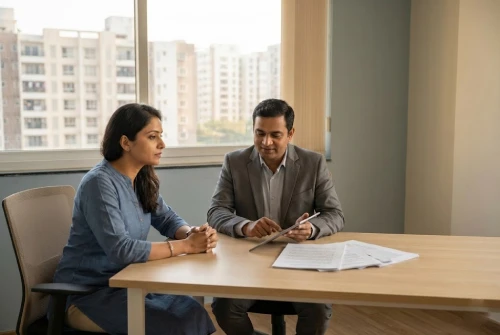
• If you are facing physical violence or serious threats, contact trusted family/friends and, where necessary, the police or a women’s helpline.
• Consider using the Domestic Violence Act to seek immediate protection and residence orders.
• Change passwords on your phone, email, social media, and banking. Do not share OTPs or PINs.
• You can also register a complaint with the National Commission for Women through their online complaint portal.
Step 2: Consult a Family Law Lawyer Early
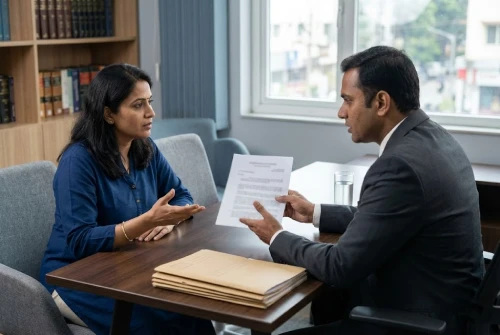
• Before taking big steps like leaving home, sending messages, or signing documents, speak to a lawyer.
• A lawyer will help you understand your rights, likely outcomes, and the best strategy for your specific facts.
• At Kapil Dixit LLP, we often have clients who tell us, “I wish I had come earlier.” Early advice can prevent costly mistakes.
Step 3: Collect and Preserve Evidence
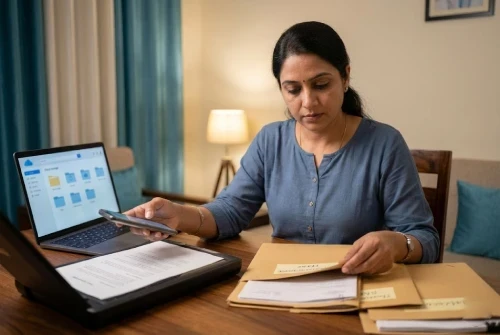
Courts decide cases based on evidence, not only emotions. Start quietly organising:
• Marriage certificate and wedding invitations/photos
• Aadhaar, PAN, and bank details of both spouses (if accessible)
• Medical records of injuries or mental health treatment
• WhatsApp chats, emails, call recordings (where legally permissible) showing abuse, threats, admissions, etc.
• Bank statements, salary slips, and IT returns showing your husband’s income and lifestyle
• School fee receipts and documents for children
• Proof of dowry demands, gifts, jewellery invoices, and photos of stridhan
Store copies safely – with a trusted person, cloud storage, or email.
Step 4: Assess Finances and Immediate Needs

• Estimate your monthly living expenses for yourself and children (rent, food, school, medical, travel).
• Identify whether you can support yourself temporarily or need urgent maintenance.
• Your lawyer may advise filing for interim maintenance along with or before the divorce petition by the wife.
Step 5: Decide the Type of Case – Mutual Consent or Contested

• If there is a realistic possibility of agreement with your husband on divorce, maintenance, and custody, a mutual consent divorce may be emotionally easier and faster.
• If there is serious cruelty, dowry harassment, desertion, or refusal to cooperate, a contested divorce may be necessary.
Your lawyer will help you weigh the legal strength of your grounds and whether parallel actions under the DV Act or criminal law are needed.
Step 6: Filing the Divorce Petition

• Your lawyer will draft the petition clearly stating the facts, grounds, reliefs (divorce, maintenance, custody, residence, etc.), and supporting documents. For a more detailed overview of the filing process, you can also read our guide on how to file for divorce in India.
• The petition is filed before the appropriate Family Court – for example, in Bengaluru, based on the place of marriage, last residence together, or where you currently reside.
• The court issues a notice to your husband to appear and reply.
Step 7: Court Hearings, Mediation, and Evidence
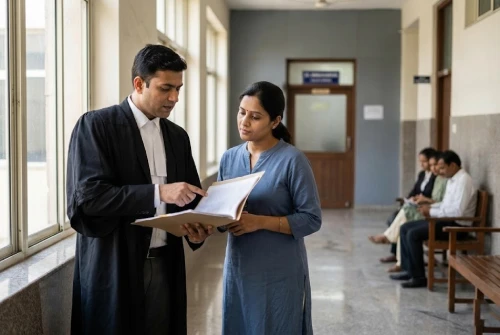
• Many Family Courts first send parties to mediation to see if a settlement is possible.
• In contested matters, both sides file written statements and affidavits; evidence is recorded through examination and cross‑examination.
• Interim applications (maintenance, custody, residence, injunctions) are decided during the case.
• You or your lawyer can track the status of your case online through the eCourts Services portal.
Step 8: Avoid Common Mistakes

• Do not sign blank papers, joint applications, or settlements without legal advice.
• Avoid sending angry messages, threatening posts, or defamatory comments on social media – they can be used against you.
• Avoid informal cash settlements without proper written terms.
• Do not stop children from meeting the other parent without a legal basis; it may harm your custody case.
Why Expert Legal Counsel from Kapil Dixit LLP Matters
A divorce petition by wife is not only about the law on paper. It is about your life, safety, dignity, children, and long‑term financial stability. Having the right legal team makes a real difference.
At Kapil Dixit LLP, our family and divorce lawyers in Bangalore can help you with:
- Careful listening and fact‑finding: We take time to understand your story – not just dates and documents, but your fears, priorities, and boundaries.
- Assessing legal grounds and risks: We honestly evaluate whether cruelty, desertion, or other grounds are strong enough, and whether to combine divorce with DV Act or maintenance proceedings.
- Choosing the right forum and route: Whether to start with a divorce petition by the wife, a DV Act case, a Section 125 CrPC maintenance claim, or negotiation for mutual consent – strategy matters.
- Drafting strong petitions and replies: Clear, precise pleadings reduce confusion and increase your chances of favourable orders.
- Representation before courts in Bengaluru and beyond: We appear before Family Courts and other forums, handle evidence, arguments, and settlement discussions.
- Negotiating fair settlements: Where appropriate, we help you reach structured, written settlements that protect your future, instead of hurried, one‑sided compromises.
Most importantly, we walk with you through a very sensitive phase of your life – explaining every step in simple language and helping you make informed choices.
FAQs on Divorce Petition by Wife in India
Can a wife file for divorce even if the husband refuses?
Yes. A divorce petition by wife does not require the husband’s permission. If he does not agree to a mutual consent divorce, you can file a contested divorce on recognised legal grounds such as cruelty, desertion, adultery, or others. The court will then examine the evidence and decide.
How long does a divorce petition by a wife usually take?
Timelines vary from city to city. A mutual consent divorce can sometimes be concluded within 6–12 months, depending on court workload and whether the statutory cooling‑off period is waived. A contested divorce may take several years, especially if there are many interim applications or appeals. However, interim maintenance and custody orders are usually decided earlier in the process.
Do I have to live separately before filing a divorce petition by wife in India?
For a mutual consent divorce, spouses generally must show they have been living separately for at least one year. For a contested divorce, you can file even while staying in the same house if cruelty or other grounds exist. However, for desertion, the period of desertion (usually two years) is counted from when your husband abandoned you without reasonable cause.
Will I automatically get maintenance if I file for divorce by wife?
Maintenance is not automatic, but if you cannot reasonably maintain yourself and your husband has sufficient income, courts are generally sympathetic. You must show your financial need, his earning capacity, and lifestyle. Courts look at factors like your qualifications, health, children’s expenses, and the standard of living during marriage.
What happens to my job and career if I file for divorce?
Legally, you are free to work, change jobs or move cities, subject to any specific court orders (for example, relating to children’s schooling or travel). Many wives actually become more financially independent after starting the process. However, if relocation affects child custody or visitation, you should discuss the implications with your lawyer before making big moves.
Can I get custody of my children if I file a divorce petition by wife?
Custody is decided based on the best interest of the child, not simply on who filed the case or who is the mother or father. In many cases, especially for younger children, mothers get primary custody, with reasonable visitation for fathers. Courts may also order joint decision‑making on major issues like education and health. For a deeper explanation of how courts look at custody, you can read our guide on child custody in India during the divorce process.
You Do Not Have to Suffer in Silence
Reaching the point where you are considering a divorce petition by wife is never easy. It usually comes after months or years of trying, adjusting, and hoping things will improve. Feeling anxious about children, finances, and family reputation is natural.
But here is the reality: Indian law gives you clear tools to protect yourself. You have the right to seek safety, dignity, financial support, and, when necessary, a legal end to the marriage. The earlier you understand your options, the more confidently you can decide what is right for you.
If you are a wife in Bengaluru, Karnataka, or anywhere in India and are thinking about divorce, you do not have to go through this alone. Reach out to Kapil Dixit LLP for a confidential consultation – in person or through an online meeting – and let a specialised family law team guide you through your next steps.
Disclaimer: This article is for general information only and does not constitute specific legal advice. Please consult a qualified lawyer for advice on your particular situation.

